June, 1635
"All I'm saying is, it could have been any one of you," commented Major Dag Rödvinge of the Army of Sweden. "The only reason I got the job is I was closest to the colonel when he had his brainstorm about Engler and Narnia. Why you think I should be happy about it, I don't know!"
He finished his remarks with a scowl at his fellow officers and aides to Colonel Nils Ekstrom. Here, in the officer's mess of Kristina Base, the Army of Sweden encampment nearest Magdeburg, Dag Rödvinge felt sufficiently comfortable to show the aggravation he kept hidden on duty.
Major Svante Musta, his swarthy looks a heritage from an Algerine grandmother captured/freed during a melee with Sallee corsairs, shook his head to refute Dag's denial of his good luck.
"Face it, Dag. Thanks to the colonel's ‘brainstorm' you're personally known to the king and the princess. Most of us, we slave day in day out to maybe have our names dropped in passing, and you manage it without even trying." Shaking his head again, this time in befuddlement at the workings of fate, he added, "Why you're complaining about it, I don't get!"
"That's what I've been saying," interjected Captain Viggo Hansteen. Cursed or blessed with blazing-red hair and unusually pale skin, his concurrent aversion to direct sunlight had the lower ranks nickname him ‘Vampire.' Belying the sobriquet, his canines were no longer than anyone else's as he grinned at Dag and said, "The way the princess hands out titles, Dag here is likely to wind up as Baron, Baron—" He snapped his fingers, mind racing to think of another famed fictional land in up-time children's books.
"Baron" Rödvinge scowled again at his friends. "Don't bother. Lars"—Captain Lars Kettunen, usually absent from the mess as a married father of three girls and two boys ought to be—"already told me what the princess will name me."
Svante and Viggo, grinning, egged him on. "Come on Dag, tell!" "You know you want to!"
Reflecting that perhaps women were right about men having a strange way of showing friendship, Rödvinge downed the last of his beer and confessed.
"Mossflower." Before the hoots and hollers could begin, Dag Rödvinge drew upon the full dignity of his ‘title' and preemptively struck with, "Go ahead guys, tell me again how ‘lucky' I am!"
Alas for Baron Mossflower, his luck held. Bowing before him, Svante and Viggo treated Dag to choruses of "Praise Baron Mossflower!" and "All hail Baron Mossflower!"
Deciding there wasn't any perhaps and women were right about men, Dag held up his hands in mock surrender. "All right all right, if you've all had your fun, I'll get the drinks in!"
Ignoring the "Bless Baron Mossflower!" and "God keep you, Baron Mossflower!" Dag turned his back on the clowning and signaled to the barman.
"Same again, Fritz."
Fritz, full name Fritz Rumey, poured out three beers into the new up-time-based schooner glasses. Relieved the fad of calling him ‘you crazy Russian' after the bartender in Casablanca had seemingly run its course, he celebrated by discreetly removing the used glasses and wiping clean the bar.
Unaware of how he'd endeared himself to one of the bar staff, Rödvinge returned to his friends. The beers having mellowed them, they left off the adulation and returned to questioning his questioning of his luck.
"Honestly, Dag, sure it's irregular, this getting land for Imperial Counts, but it's not like it's permanent," stated Viggo.
"Exactly!" chimed Svante. "Look at it this way, there's a place called Narnia now, all thanks to you. It's like the princess said, you made it real. That alone gets you into the history books!" He raised his glass to Viggo, who clinked it, acknowledging the truth of Svante's words.
Toast finished, Viggo continued Svante's argument. "Yeah, and you've nearly got Wismar finished with for that lucky bastard Eddie Cantrell, so there's that. Just got Oz to handle and that's that, Baron Mossflower!"
Rödvinge grimaced. "You were doing so well up until the end there, Viggo! You almost had me convinced!" He sipped his beer to relieve his dry throat, then let the grimace slip away, replaced with a grin.
"All the same, I guess if you guys aren't going to let me enjoy complaining, I guess I can admit it isn't really that bad. Thank God the king changed his mind about Wismar Bay!" This time he raised his beer and the other two clinked it.
"Yes," nodded Svante. "What is it, about fifteen miles a side? Good luck getting that past the chancellor!" He shuddered theatrically, almost but not quite spilling his free beer. Though his remark and gesture were probably unjust to Chancellor Axel Oxenstierna, there was enough truth to make those appropriate.
Rödvinge sipped his beer. "Exactly. Now, just get Cantrell and Anne Cathrine some land in Wismar and on the bay. And do it before that Danish sot Christian hears about it and tries to outdo the king."
At that remark Rödvinge's fellow aides snorted. "Christian would, too. Even has a good excuse for it," admitted Viggo. "Anne Cathrine being his daughter. Although last I heard, he's busy getting the Dagebüll dams and dikes rebuilt." After sipping his beer, he mused more on King Christian IV of Denmark. "It's like the storm personally offended him. He wasn't any too pleased with Cantrell either, I heard."
Rödvinge nodded at that. "The man does have a mercurial temperament," he stated in support of Viggo. "I know the up-timers say bloodletting and balancing the humours is stupid, but sometimes I'm not so sure it's all wrong. Actually," he said, musing in turn, "the more I think about it, the less I know why I'm complaining. The king may have me flying all over the USE buying land here and there, but imagine if I was working for Christian!" Imitating Svante, Rödvinge shuddered in revulsion at the thought, enough to slosh his beer but not spill it.
Svante and Viggo raised their beers, supporting Dag's appraisal of working for the fanciful Christian IV of Denmark. Sipping their beers in turn, Svante spoke first.
"Speaking of flying, Dag, how's it going with the flights into Wismar? Pretty swank by the way, getting Fledge assigned to you," he said.
Rödvinge shook his head and raised his eyes to the ceiling in mock rejection of any swank, flash, or flair involved in getting and flying aboard the Gustav plane named after the first flying horse of Narnia.
"I'm almost sure Colonel Wood makes certain Fledge is available whenever I need a flight as payback for making the Air Force deliver books. A joke plane for a joke purpose. Either that or he thinks it's a compliment." He let a smile show and humor shine in his amethyst-coloured eyes as he presented the possibility.
"Anyway, it's not like I ever request Fledge, it's always the one that shows up. If there's a message there I haven't gotten it," he finished, allowing a note of aggravation about potential messing-around by the USE Air Force into his voice. In Rödvinge's opinion, the sooner Gustav Adolf's Svenska Flygvapnet got into production the better.
Svante echoed the aggravation in his reply. "Joke or not, it's the one that keeps flying you into Mecklenburg, Dag. That's a message right there, and not a good one." Beside him, Viggo raised and sipped his glass in agreement at their friend Dag's visits to the USE's most backward province. That fellow Lutherans populated it made no difference. Mecklenburg, that benighted hovel of a place, beat out the priest-ridden bishoprics for willful ignorance with the local adel adding arrogant ineptitude to the mix.
Both men were surprised when Dag shook his head no instead of lifting his glass in sorrowful acknowledgement of his travails.
"Thanks, guys, but Wismar's not Mecklenburg, least it's not what we think of when we think of Mecklenburg. Believe it or not, the place is actually okay, even better than that, really."
That made his friends goggle. "Wismar? You sure about that, Dag?" asked Viggo.
"Sure" said Dag, sipping his beer. "I mean, it's still in Mecklenburg, so it's no Magdeburg or even Luebeck, but the place has come along a lot. It's the one place in the province where there are up-timers, after all. Plus, they like having the air field nearby with all those Air Force blueberries and their money, plus Wismar's where Hans Richter and Larry Wild set off to destroy the Danes. They feel they gotta live up to that."
"And Bjorn Svedborg," added Viggo. Too few people remembered Larry Wild, even fewer the Swedish sailor who'd charged with Cantrell and Wild against the naval might of the League of Ostend.
A German, an American, a Swede; a trio who in an eerie, perhaps necessary coincidence reflected the larger alliance presently building the United States of Europe and by extension the world.
Viggo raised his glass. "Hans Richter."
Beside him, Svante raised his glass. "Lawrence Wild."
Dag in turn raised his. "Bjorn Svedborg."
Toasts completed, all three men drank down their beers.
Finished, Rödvinge stood up. "See you tomorrow evening, guys. I'm for an early night."
As all of Ekstrom's aides had wangled a flight or two by now, none questioned his leaving the mess early. Maybe those who flew in the fabled up-time jumbo jets could afford late nights and drinking rounds; in the here and now even passengers on TransEuropean Airlines' Jupiter biplane avoided those complications.
****
Years afterwards Dag Rödvinge would relate this flight into Wismar as proof of how flying places pilots and passengers into a different world, disconnected from events on the ground. Even with radio? he'd be asked; yes, even with radio.
When he and Gustav pilot Lieutenant Emil Castner clambered aboard the Fledge, everything was as peaceful as could be.
By the time they landed in Wismar two hours later, peaceful wasn't the word.
Their first clue to matters being awry was as Castner prepared to land. As he concentrated on the landing, Rödvinge distracted himself from the controlled crash he'd concluded landings were by looking everywhere except at the rushing-up ground.
Marching along a nearby road was a group of civilians, led by the local Committee of Correspondence members.
The sight puzzled Rödvinge. As an officer in the Army of Sweden he'd little to do with the Committees. That said, you didn't get to be an officer in Gustav Adolf's army and an aide to one of his senior colonels without keeping up with outside matters and events.
Overall he figured the CoCs were wolves, ones willing to walk alongside the king and the prince provided neither tried muzzling the beasts.
The CoCs might one day be the problem Chancellor Oxenstierna had mostly given up trying to convince the king they were, but right now, they weren't.
But why was the Wismar Committee marching into the countryside? Yes, they couldn't stand the Mecklenburg adel and good for them, but they weren't stupid about it. In the province's cities and towns the CoCs were powerful; in the country it was those two-legged svinaskitar who ruled.
Had some of them entered Wismar and asserted their supposed right to do whatever whenever they liked?
No use speculating, figured Dag Rödvinge. Whatever had the CoC marching he'd find out soon enough.
As Castner carefully taxied the plane into a revetment Dag unclenched his fists. It wasn't that he had a problem with flying, as such. Takeoffs and flight, no problem. However, the sight of the ground rushing up at him all in a heap made all sorts of jagged thoughts go through his mind.
There was talk somebody near the Ring of Fire had set up an enterprise, providing anybody able to afford it with a bird's eye view of Grantville and surroundings. Maybe that was something to look into when he had the time?
"Until then, two out of three ain't bad," he muttered to himself as he unbuckled the seat harness and gripped his attaché case.
"Pardon, sir?" asked Castner, craning his neck and head backwards.
"Nothing. Lines from an up-time song, by a guy named—get this—Meatloaf," explained Dag.
"Really, Major?" asked the pilot, unbuckling his own seat harness.
"Really. Guy looks like a troll, sings like the Holy Spirit."
"Weird," opined Castner, carefully opening the canopy. Outside the ground crew moved in to check over Fledge and make whatever repairs, adjustments, and alterations the techs with their arcane knowledge deemed necessary.
Crew chief Fritz Beckhardt came up to Major Rödvinge and Lieutenant Castner. "Hello, Sirs. The station CO will meet you in the tower. A lot's happened since you took off. A lot."
"Anything to do with the Committees, Chief?" asked Rödvinge. "I saw them moving off as we came in."
"I couldn't possibly say, Major. Chief Matowski will explain it all. Excuse me," said Chief Beckhardt, walking over to where his crew already had the cowling up and were busily peering into the depths of the engine, grunts and mm-mmms conveying all sorts of information to those schooled in the mysteries.
Behind him, Castner shook his head in mock dismay at Beckhardt's off-hand dismissal of him and Rödvinge. "All I do is fly the thing, you know. He owns it."
Rödvinge raised an approving thumb to Castner's statement. "Sergeants, Löjtnant Castner. Letting officers think they're in charge since before King David. Anyway, time to get out of here! Something tells me we really want to know what's up."
****
What was up was something called Operation Krystalnacht. The destruction throughout the USE of all Jew-haters & witch-hunters.
Officially it was being done solely by the Committees of Correspondence. Hence the marching group seen by Rödvinge.
Unofficially, only fools, idiots, and Charles of England doubted the Committees didn't have the full support of Prime Minister Stearns, the Fourth of July Party, and almost every other up-timer.
Almost, because at least one was a by-choice bastard who'd both had a copy of that Hell-printed Protocols of the Elders of Zion and the monstrous idea of sending it out into the world.
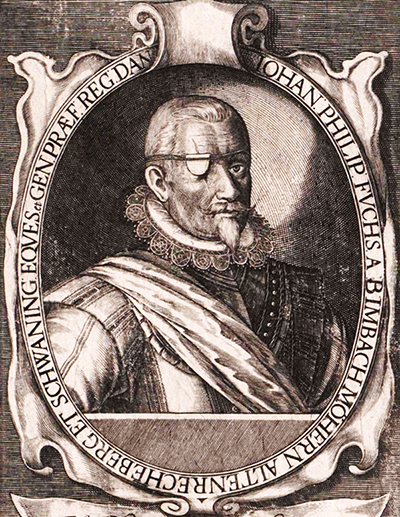
It wasn't only that Stearns' wife Rebecca was Jewish. It wasn't only that she and the prince had for years been subjected to the most evil slurs imaginable by those thankfully now-dead by hanging abominations Polycarp ‘Pestilence' Lenz and that born-wrong walking-abortion moder-Fuchs von Bimbach.
It was that along with that and more the Jew-haters and witch-burners had murdered two of the best men the world had, Grantville Mayor Henry Dreeson and Minister Enoch Wiley. All because those two venerables had stood and defended with their lives the synagogue of Grantville.
Major Dag Rödvinge had actually seen both men on an obligatory quick tour of Grantville to see and understand the implications and benefits of the king's alliance with the up-timers.
It couldn't be said he'd personally known them, no. However, back in Torshälla he'd known men just like them.
For a moment one Major Dag Rödvinge of the Army of Sweden considered throwing his insignificant quasi-insulting mission to the proverbial winds and rushing down the road to join the CoC crusade.
Luckily or not, he remembered he was an Army of Sweden major and stayed in Chief Matowski's office. Officially First Sergeant Robert John Matowski, the needs of the Air Force had him acting as the commanding officer of Wismar Air Force base until Colonel Jesse Wood appointed a replacement. Scuttlebutt had that happening the day after Wood allowed himself to be raised to the rank of air marshal. As Wood refused the RAF nomenclature as obstinately as the emperor wanted him to accept, Matowski might achieve the rarity of retiring an NCO with a captain's pay.
Whatever his rank, Matowski ordered Lieutenant Emil Castner to hold himself and Fledge on the base.
When Castner and Rödvinge protested Matowski forcefully told them, "Nobody cares what your orders were, I'm telling you what they are now, and they're you"—he pointed at Castner—"stay here and the plane with you. You"—the pointing finger moved to Rödvinge—"either stay here or walk back. Yeah, it's lousy on you," conceded Matowski, "but it's called the needs of the service. Just think of it as a little unplanned holiday, Major."
In Wismar? thought Rödvinge. How? He briefly considered overruling Matowski, then mentally laughed the abysmally stupid thought away. Officially, Major Dag Rödvinge outranked Base Chief Matowski, the same way Löjtnant Castner outranked Chief Beckhardt. There were majors and löjtnants who thought rank always applied. Sometimes those officers learned reality. Those who didn't wound up as civilians.
There being nothing else to do, Major Rödvinge and Lieutenant Castner nodded, accepting Base Chief Matowski's rightful authority over them. Rödvinge added, "Chief, I did come here to attend to business in town. With your permission, I will go into Wismar and complete it."
Matowski grunted approval. "Let me know what you find when you return, Major. I wouldn't expect the CoCs had much to do in Wismar, but I'd like to know what if anything they did."
Taking his leave, Rödvinge left Matowski and Castner in the office, Matowski saying to his clerk, "Dankwort, go and get the other pilots, we need to prepare—"
****
On the walk into Wismar, Dag Rödvinge considered what he might encounter. Officially, there were no Jews in Wismar or in Mecklenburg province, not since their 1350 expulsion.
Unofficially, as with Stearns's support of Krystalnacht, Jews had quietly returned to the province over the passing centuries. In Wismar they sensibly congregated in the Altböterstrasse, close to the harbour. The proximity offered them (really, anybody) two advantages.
One, those nearby generally held more cosmopolitan views. Travel didn't always broaden the mind, but no cliché would exist without some truth. Two, when life depended on running fast and far, ports held ships and boats, along with perhaps-friendly and/or bribable captains and crews.
So. As Chief Matowski said, there probably hadn't been much for the local Committee to do in Wismar.
Rödvinge checked his Kubiak-made Sam Browne belt and holster, ensuring his Hockenjoss & Klott revolver was ready to draw.
Those advantages of a port? Great also for criminals. With the Wismar Committee of Correspondence temporarily absent, idiots might view one Dag Rödvinge and the letters of credit he carried as eminently unresistable.
Moreover, he was Swedish, and Gustav Adolf had appointed himself Duke of Mecklenburg on the age-old basis of Might Makes Right.
It also didn't help that until Gustav Adolf's alliance with the up-timers and the Abrabanels, the cost of quartering Swedish soldiers in Wismar had mostly to wholly been paid by Wismar.
The Ring of Fire and the alliance had changed all that for the far, far better.
Assault was now an unlikely eventuality. But then, so was the Ring of Fire.
As he approached the seaside redoubt set in the eastern part of Wismar's outer wall, Dag Rödvinge got out his ID papers from an inside jacket pocket. Wismar's guards tended to be more professional about matters than most, probably because of the nearby Air Force base.
Finished with that, Rödvinge took in a deep breath of air as he walked the road between the outer and inner walls into Wismar proper. The scents of the sea on one side and salt marsh on the other usually combined into a pleasing whole, with the cries of seagulls, marsh terns, ospreys, and kites adding melody.
Senses active and on alert, Major Dag Rödvinge walked across a bridge, through the Pöhler Thor gate and into Wismar.
****
Inside, the Church Of St. Nicholas dominated the skyline as Rödvinge walked past it and across the large street called the Grube Lauffendt. Keeping the Grey Monks cloister on his right, he walked a block past it and up one street to Wismar's market square, with its intricate wrought-iron fountain the Wasserkunst in the middle and the town's Rathaus on the west side.
It also held the town gallows, and it was there Rödvinge came across the first possible sign of Committee activity. A crowd had gathered around that structure, staring up and pointing at bodies hanging there. As he watched, one of the bodies was lowered into a cart waiting below.
Not my business, decided Rödvinge. Karl Lang, the lawyer helping Rödvinge acquire for the Cantrells the Fürstenhaus and two hundred acres of beachfront property along the western edge of Wismar Bay, had his office and home on the square. Rödvinge headed that way when a cry of "Hey, Major, Major Rödvinge!" came from behind him.
Skit cursed Rödvinge. Skit skit skit! That being language an officer of the Army of Sweden shouldn't often use on civilians, certainly not on civilians with the same lord and king/emperor, he again disciplined his face and turned to his doom. I must like being in this situation, he fumed. I must, it keeps happening!
This time when he turned it wasn't Colonel Ekstrom he faced, it was Georg Roeders and Werner Hartenstein, the two men Rödvinge and Lang had almost finished negotiating with for the Fürstenhaus and the beaches.
This day just keeps getting better and better, Rödvinge told himself. Letting none of his inner emotion show, he warmly greeted the men as they came up. "Georg, Werner, good to see you!" he said, waving to them. "This works out, we can go to Karl's together!"
The two men blinked—ahh, I never thought it would work anyway—at him. "Major, Dag, haven't you heard?" asked Georg, Werner nodding.
Unmilitary though it was, Rödvinge shrugged. "Clearly not, or I'd know what you and Werner are talking about," he explained. "What are we talking about?" he asked, faking curiosity.
Werner answered this time. "Well—that!" he said, pointing to the hanging men and women, another one dropping with a wet sound into the cart. "Don't you see?"
Dag looked up at the corpses. Shrugged again. "I see dead people." Damn it, perfect quote, perfect timing, and nobody here knows enough to appreciate it!
This time Georg and Werner goggled at him. "Dag!" cried Werner. "It— these men—they—" His mouth opened and shut in rapid sequence, his mouth trying to catch up with his mind.
Werner took over for his friend. "They weren't supposed to be hanged, Dag! The Committee, they just—broke in, they dragged out—"
His mouth and mind in sequence, Georg stated, "They just went and dragged these men and women here and hanged them, Dag! Just like that!"
By now a small group had gathered around the three men, drawn by Georg and Werner's loud sputtering and Rödvinge's Army of Sweden uniform. From the back were cries of ‘Yeah! Just like that!" and "Ain't right" and "What's a Schwedin doing here anyway?"
Crap crap crap, Rödvinge muttered to himself. I don't need this! Aloud, he shouted, "The Schwedin's Major Dag Rödvinge! Army Of Sweden, Here On Business For The Duke Of Mecklenburg!" As planned and hoped, the yell made those around him step back a bit. Taking the initiative, Rödvinge then let loose with the parade ground bellow taught him years before by that old boulder of a drill instructor Sergeant Albert Bjergson.
"Whatever's Going On, I DON'T CARE! Hear Me, I DON'T CARE! Got A Problem, TELL IT TO MY FACE OR BACK OFF!
As expected, the shock of finding out he could yell louder made more step away. Especially since the Bjergson-taught glare on his face made recruits cry, never mind civilians.
Relieved, Major Rödvinge mentally wiped sweat from his forehead. Theater, Dag. It's all theater. Tack Gud it worked, otherwise—
A heavyset man with a pugnacious chin and bulldog jowls bullied his way through the retreating throng, roaring, "YEAH, I GOT A PROBLEM, SCHWEDIN!"
Oh you idiot! cursed Rödvinge. Seizing the initiative, stepping up to face the dumskalle, he roared back, "YOU GOT A PROBLEM?"
"YEAH, I—" and Rödvinge punched him in the jaw, knocking him out and down.
Helvete, thought Rödvinge, his glaring face masking the pain in his right hand, I really really need to use my left instead!
Keeping up the theatre, he calmly told the idiot and the few onlookers left, "And now you don't. You're welcome."
Turning his back on them all, it now being safe to do so, he walked back to where Georg Roeders and Werner Hartenstein stood staring, eyes wide open and mouths not—Damn, that hit deserves better!—telling them, "Come on already, Karl's waiting for us!"
Striding quickly, he reached Karl Lang's home and office. The dark oaken door stood straight in the middle of the Old Hanseatic/North German Gothic building, its red bricks and white trim mirroring that of the Church of St. Nicholas and probably built about the same time.
As Georg Roeders and Werner Hartenstein caught up with him, Dag Rödvinge lifted the cast-iron anchor-shaped door knocker with his left hand and knocked once, twice, three times. He let his right hand hang at his side, throbbing with pain. Please God, let them have some cold water inside! he mentally willed through the door.
Blessedly, Roeders and Hartenstein kept silent. For now.
****
Behind the door came the sounds of locks opening and bolts being drawn back. The door opened, showing homeowner and lawyer Karl Lang behind it. A tall, sparse man, he rather resembled Peter Cushing as Grand Moff Tarkin, as he'd learn months later on a visit to Grantville.
Unlike Tarkin, Karl Lang could and did smile, as he welcomed the three inside and called to a maidservant, "Maria! Take the major's coat and Herr Roeders' and Herr Hartenstein's as well."
As Maria took the coats and placed those upon wood hangers (‘the first in Wismar!' Karl's wife Eleonore pridefully stated at a dinner party), her employer escorted his three friends and clients up stairs and into his private chambers. An open window facing the town square indicated somebody had looked at and listened to recent activity there.
The somebody was Karl Lang, who cheerfully admitted such as he poured himself and the others small beer into three mugs. "I must say, that was a beautiful punch, Dag!" He looked out the open window. "He's just getting up now, I see. Quite the ‘closing argument,' wouldn't you say, Werne?"
"Indeed, though I wouldn't recommend it in the courtroom," drily stated Werner Hartenstein, taking the proffered mug. "Useful though it would sometimes be."
"Shhhh!" hushed his friend and client Georg Roeders. "We've already seen the major at work, get the money before giving him ideas!"
Chuckling, Karl handed a mug to Rödvinge. "There you are, Dag—oh of course!" he exclaimed, noticing how it was taken with the left hand. "Dear me, I didn't think, but of course, your hand must be in pain. Would you like something stronger, then?"
"Thanks," said Major Rödvinge, letting his face wince. "But this is enough. Actually, I could do with a bowl of cold water, if you have one."
"Ah" interjected Georg. "I apologize, Dag. I didn't realize it hurt that much, and I should have, I've been in enough fights to know better. Add salt to the water, that helps a lot, I found."
As his client thanked Georg for his advice, Karl Lang explained, "I can do better than that, Dag. We still have some ice left over from the winter. Maria!" he called out, down the stairs. Maria presumably appearing at its foot, he added "Fetch the Major a bowl of cold water with ice and salt in it, please!" Finished, he turned back to the others, saying "Let's leave discussing anything until she's brought it, gentlemen." As the others nodded agreement, he poured himself and Georg a mug of small beer.
Werner, sipping his beer, curiously asked "This is a new mug, isn't it, Karl? In fact, all of them are? What happened?"
Giving Werner the up-timers' third-favourite hand gesture, a thumbs-up, Karl complimented his friend and courtroom rival with, "Sharp eyes, Werner. As to what happened"—his lips thinned as he remembered—"I finally convinced Eleonore lead's a poisonous thing to have around. The kinder and I had a great time breaking every mug, plate, jug, pitcher and cup in the place. Then I went to Fischer the potter and watched him and his family shape and fire replacements."
He looked around at his office. "This summer's going to be horrible, getting the walls and everywhere scraped clean and redone with milk paint, but at least when it's done I won't feel I have to stop breathing everywhere I go."
Dag, familiar with the up-timers' abhorrence of lead in anything except bullets, nodded at his lawyer's sagesse. Georg and Werner, not having his advantages, glanced back and forth among themselves and at Karl. Georg spoke first.
"All the plates and everything, Karl? Everything?" he asked, shocked.
Werner chimed in. "I'm amazed your wife agreed, Karl. Is lead really that bad?"
"Dag?" asked Karl. "You tell them."
Setting his mug on the small table before him, Rödvinge explained. "The up-timers won't have lead anywhere near them. Per their medical knowledge, it retards brain growth and worse. When the Emperor found out rooms in the Magdeburg palace were done in lead paint, he ordered the paneling burnt, and the supplier charged with treason."
Georg Roeders and Werner Hartenstein did a double-take, then Werner asked "What happened?"
Smiling over his lead-free mug, Rödvinge told "The Prince talked the Emperor down to civil charges. Like I said, the up-timers won't have lead anywhere near them."
"Huh," said Georg, impressed by the Major's knowledge of the inner workings of the USE. "Guess I'll be calling on Fischer myself, then."
"Likewise," admitted Werner.
Karl for his part picked up from his desk a folder tied with red tape and sat in one of the leather-upholstered chairs around the small table where the others were. Once Maria came and went, he untied the tape and spread the papers out. Beside him, Werner did the same with the papers he'd brought, with Rödvinge handing over to Karl the various papers and letters of credit brought from Magdeburg.
"Right, gentlemen, as we are all in agreement, I suggest we get down to business." The others agreeing, and pulling out their own paperwork, Karl Lang as the host and lawyer for the purchaser took charge. "Right. First, the Fürstenhaus, on St. George's Square, assessed value . . ."
****
The documents transferring the Fürstenhaus and acreage on the northwest side of Wismar Bay having been mostly agreed to in earlier visits, only a short perusal was necessary to ensure alles in ordnung, as up-timers for some curious reason loved saying. As everything in order was up-timer punctiliousness per down-timers, the American-originated German phrase translated well into Amideutsch.
Satisfied, Rödvinge withdrew his hand from the salt-and-ice water and pulled out from its leather holder a plastic pink-gel ink pen and signed the various documents. Then let the others use it to sign their names. Georg, playing the fool, tried to hide it in a pocket. A slight snap of the fingers of an outstretched hand had him place it there, smiling. "Remarkable thing, Dag! From Grantville, right?"
Replacing the pen in its holder, Dag nodded. "I, ah, got it as thanks for another bit of real estate doings. And was told very firmly to only use it for special occasions, which this is," he said, remembering the energy of Princess Kristina's eyes. Of Princess Kristina, period. And people talk about the prince, he mentally shook his head. She'll shoc—kristina them! Best way to put it!
Leaving the others ignorant of the future they wouldn't anyway believe, he gathered up his copies of the deeds and contracts. He looked outside, to the sun. Opening his attaché, he placed the papers inside, saying as he did so, "Gentlemen, if I step lively I can make it back to base before the sun sets, so excuse my rushing off, I do have to—"
The others forestalled him with cries of "Hold it!" and "Wait a minute, Dag!" Confused, Dag looked at them. "Ah- have I missed something?" he asked.
"Yes," Karl, Georg and Werner told him, Werner adding, "Dag, you're maybe the closest we have to anybody who knows"—he waved a hand at the windows and the town gallows—"what that's all about, so if you know something, please! Tell us!"
Karl and Georg nodded agreement, Karl adding, "All we know is, the Committee went wahnsinnig all of a sudden! It's—worrisome, that's what it is!"
Georg chimed in. "Worrisome, that's Karl being lawyerly, Major. What I want to know is, what's the duke going to do about it? I know he tolerates the Committees, but this can't be allowed, this going around and hanging people on a whim! Bad for business, that. All business," he finished, giving a pointed look at the attaché case still in Dag's hand.
I suppose diplomacy is also a military skill, thought Rödvinge as he continued placing documents in the case and tying it shut. All right, time to listen.
Aloud he stated, "Forgive me for answering a question with a question, but what exactly do you know about what happened, then?"
Ignoring his client's grumble of "Nothing, that's why we're asking you!" Werner Hartenstein explained, "Not much, Major. For some reason, this morning the Committee broke into homes, taverns, pulled out people and hanged them, as you saw."
Karl now spoke up. "They did say it's because those people are Judenhasser and Hexenbrenner, Dag. I can't deny it, every one they hanged was, but why now? And why?"
Three pairs of eyes faced Rödvinge, all asking the same question.
Sighing for the lunch he'd missed and the supper he also wasn't likely to have, Major Dag Rödvinge of the Army of Sweden, currently in Mecklenburg Province on detached duties for its duke, again wondering at the evil luck that had a good Svenska boy from Torshälla, dutiful to his parents, loyal to his king, obedient to the Lord, up to his ears in the most far-fetched undreamt-of tasks, answered.
"What is going on is Operation Krystalnacht. It's going on all over the USE. With the support of Michael Stearns." His eyes glinted fury as he remembered watching the Roths' videos of the liberation of Auschwitz. The ones King and Emperor Gustav Adolf II Vasa ordered his officers to see. Ordered after himself watching and weeping at the sight of skin-cloaked skeletons with shorn heads in striped cloth staring with dead eyes from behind barbed wire. "There's nothing good in what you're about to learn, except maybe that in one world it ended, and in this one it may—I repeat, may—never begin! In the world the up-timers came from, Judenhasser and Hexenbrenner—"
****
Karl Lang, Georg Roeders, and Werner Hartenstein sat silent in their leather-upholstered chairs.
Major Rödvinge leaned against Lang's desk, legs stretched out, arms folded on his chest, staring at the others.
Not defiantly, not angrily. Resolutely.
The stance of a man who'd said, "This Is." Backed with proof.
Inarguable, inescapable, proof.
Karl Lang didn't look at his friend and client. Instead, he recited the Lutheran devotion asking Jesus to
Enlighten my heart so that I walk
As a Child of the Light,
Flee and Shun the works of darkness,
And serve you this whole day,
Amen.
On the second line the others joined him, hands together and heads bent in prayer.
Finished, Karl asked, "God in Heaven, Dag, is—is all of that true?" Asked as a man hoping against hope that what he had heard was not.
Seating himself back down, Dag Rödvinge ended Karl's hope and those of Georg and Werner.
"Yes Karl. All of it. Lampshades"—his mouth warped in disgust—"of human skin. Injections of typhoid and, and worse. Zyklon-B guh—gas." He forced that last word out. "Experiments on—twins. Others. All true. Gud hjälp mig, all!"
"Gott helfe uns allen, Dag," seconded Karl. "All."
"And that's why the Commitees are—" Werner jutted a thumb over his shoulder, back to the town square.
"Yes. Exactly," emphasized Dag, his eyes reflecting again the fury he'd felt watching the VHS tapes of the Roths.
Georg stared down, seemingly at nothing. Without looking up, he said, "I understand the prince supporting this, this Krystalnacht. Hell, I do, and my wife's not Jewish!" He looked away, then back to the floor. "And the Emperor . . .?" Not as a question, more seeking comfort, something, anything, familiar in a world suddenly much colder, darker and harsh.
Puffing out his cheeks in an unmilitary outburst of air, Rödvinge presented the others with the likely attitude of their Duke, King and Emperor.
"I'm sure the Chancellor is having kittens about Krystalnacht and the Committees. As for King Gustav, he might, might, use it to horse-trade later with Stearns and his party," he told the other three.
"I wouldn't count on that though. More likely he'd be ashamed to use it." Rödvinge looked each of the others straight in the eyes, willing them to believe. "Gustav Adolf Vasa cried, men. The Lion of the North, the victor of Breitenfeld, broke down and cried. Wept at seeing the cruelty of men." A pause for breath, then another revelation. "Then the up-timers told him that in their world, Sweden saved thousands from the Nazis. Hundreds of thousands lived because Sweden took them in. He cried again as he knelt and prayed thanks to God that Sweden had not shamed itself."
His face hardened as he went on. "Remember, Gustav Adolf is Vasa, always and forever Vasa! It isn't words to him, it is him! If the King thought Captain Gars would get away with it, he'd lead the Committees! Helvete," he added, running a hand through his pale cream-coloured hair, "if I thought I could, I'd join them!"
As Karl and Werner considered the words Rödvinge told them, Georg glanced at the major, then back to the floor. His hands twisted constantly around each other as he spoke without waiting for the others to listen.
As he confessed.
"I was—I was at a witch-burning, once. Years ago, before my parents and I came here." His body went rigid as his hands continued their repetitive curling.
"I don't know why this old woman was called a witch, maybe the harvest was bad, anyway she got accused, tied up and set on fire." He swallowed. "I didn't know where everybody was going, and then I was there, and she was set on fire." Swallowing again on a dry throat, he described a long-ago "proper and legal" immolation. He stammered now as his confession continued.
"I th-th-threw suh-stones at her. I suh-screamed, I yuh-yelled, and I threw stones hard as I could, right at her head. Later on the pastor told my parents how guh-guh-good I'd been, a tuh-rue soldier of the Lord."
He lifted his head now to face his friends, to face judgment. "Truth is, I saw her eyes, her poor, confused eyes. She wasn't a witch, just some poor old woman without family, in the wrong place, wrong time. I didn't throw stones because I hated her, I swear to God I didn't hate her, I threw stones to ku-ku-kill her quick, before the fire did it." He looked away. "Thing is, I'll never know if she knew that." He looked back at his confessors. "No. No more lies. I know she didn't know. She died thinking I hated her." He punched a fist hard into the other hand once, twice, before clenching both together into a fist as his ordeal flamed higher.
"Nobody got hanged for killing her. Nobody." His face hardened into the sharpest lines the others had seen on any face. "So I think about back then, and I think about right now, and I'm fine with the Committees. With Krystalnacht. Werner!" he suddenly shouted.
Startled, Werner Hartenstein gabbled out, "Y-yes?"
Georg Roeders, businessman, Wismar town council member, confessed penitent, told his lawyer and the others in the room, "Donate half of today's profits to the Committee, Werner." Softening his voice and his body, he added "Maybe it is blood money, maybe it—no, it doesn't make up for that poor old woman, and Scheisse, I wish I could remember her name—but it's still money and they can still use it, I'm sure."
Werner quickly noted his client's instruction in a notebook, adding "Verdammt, Georg, I hate you for this," he said, smiling, "but all right, I'll add half my fee. Seems proper, somehow."
Karl now spoke up. "Teuflisch, Werner, now you've got me doing it!" Standing up, he walked behind the others to his desk. Pulling open a drawer, he reached in and pulled out a purse. Reaching in, he extracted a third or a half of the contents. Returning, he handed the silver to Hartenstein. "There. Half my fee, as well."
As Werner pocketed the coins, the eyes of the three Germans turned to the one Swede in the room. They fixed him with their eyes.
Very expectant eyes.
Rolling his eyes to the ceiling and grandiloquently sighing, Major Dag Rödvinge of the Army of Sweden, currently in Wismar on detached duties for its Duke Gustav Adolf II Vasa, reached into his up-timer-inspired field jacket.
Pulling out his pocketbook, he removed several Johnnies and placed those on the table before him, mock-complaining as he did so, "I really don't get why I'm doing this, you know. After all, I am Swedish, I've nothing to apologize for."
Smirking, his lawyer Karl Lang replied, "And now you have even less to regret, Major. Think of it as balm for the soul."
As Dag smirked back, Georg grunted, "That's how I look at it. It's not enough, it'll never be enough, but it's—better, at least."
Werner, placing the bills in the same pocket as the silver, signaled agreement. Finished, he asked, "Dag, Major Rödvinge, I don't question what you said about the nah-zees, but . . . there is something that confuses me."
Rödvinge, who'd left his chair to pour himself more small beer, replied, "What?"
His face a study in puzzlement, Werner Hartenstein asked what bothered him. "As I understand it, the up-timers by their very presence change the future. Those nah-zee Arschgesichts were centuries from now. Haven't they been butterflied away?" he finished, waving his hands in a flying motion.
Returning to his chair, Rödvinge shook his head in denial of Werner's postulation. "No, Werner. Yes, the Nazis will never exist now." His face and voice hardened till both resembled Georg Roeder's of earlier.
"That doesn't mean svinaskitar like the Nazis will never arise. If not in the USE or the Union, elsewhere. Killing Judenhasser and Hexenbrenner only means that today, we're free of them." Cold hate now entered his voice. "But not for long. The Committees, the prince, the king, we, are only winning for now. The die Bestien der Hölle always come back. Always."
Staring the others straight in the eyes, the sternness of his gaze intentionally making them uncomfortable, his words struck as the spinning flail and stinging whip he meant those to be.
"That's the real lesson of the Nazis, people. Yes, up-time they were defeated. Yes, the prince's grandfather liberated Buchenwald death camp, saving Don Roth's father and others. Yes, Sweden up-time saved hundreds of thousands and yes, Germany murdered millions and yes, none of that will now happen and still it doesn't matter, the Satan-spawn always come back."
The last of his warning struck as the cataclysm Rödvinge needed it to be.
"The up-timers have a saying, The Price of Liberty is Eternal Vigilance. Personally I think it's too soft, too limited." The hate now gone, all that was left was the cold, that of Christ upon the workers of iniquity. "Our very souls demand eternal vigilance. Because when we forget that, we lose the, the better angels of our nature."
Silence. For several long seconds. Then, from Karl Lang, a comment sounding as a plea.
"Himmel, Major, I feel . . ." He stopped. "I feel . . . I feel I've been in a battle. Next to the cannons. For hours."
"I agree, Karl," seconded Werner Hartenstein. "Major, I thought after you first spoke I knew why Krystalnacht is happening. Now, I understand."
Georg spoke in turn. "I agree, Werner. Major, will you be staying in Wismar after this?"
The seeming non sequitur took all others by surprise. Rödvinge, his mouth quirking into a rueful smile, admitted, "Yes. All flights are cancelled. Chief Matowski told me I either walk back or stay here. I'm staying here."
"Surely your rank . . ." diffidently suggested Werner, his stance and voice showing he expected to be told rank didn't apply.
He was right, as Rödvinge snorted and smiled. "Yeah, right, as the up-timers say. No, I'm here for the duration." Laughing, he added, "You don't get rid of me that easily, Werner."
Ignoring his lawyer's muttered Damn, so close! humour, Georg Roeders explained why the question about Major Dag Rödvinge's future movements.
Looking now as diffident as Werner earlier, he expostulated. "You know we all here believe you, Dag. We trust your word because we know you. And also because of past events," he admitted, referring to his confession. "But we're not the town council. Or the town." He cocked his head back and forth, body language saying all the same and nevertheless. "Without false humility, myself, Werner and Karl are important members of the town and the council, and I believe, gentlemen"—he motioned to the two lawyers—"our support of Dag and the Committee will largely help both as well as lessen worries over Krystalnacht." As the others nodded assent to both their importance and the help they would provide, Georg finished with "It would greatly smooth matters for you to explain the nah-zees and the, the Holocaust to the town council and the town."
Karl and Werner chimed in with "Georg's right, Dag" and "Exactly so." As Dag's lawyer, Karl spoke further. "More need to know why Krystalnacht is happening and how to respond to it. As for your ah, passion, it has its place, Dag. Even in the courtroom. And town council. But not from you. Not if you wish to be heard, Dag. And on this, you need to be. Understood?" For a moment, he let show to Dag the resoluteness that in court had often led witnesses to recant earlier, false testimony.
Mentally shaking his head again at what was happening once more to a good Törshalla boy, Major Dag Rödvinge agreed. "I will, and not just because my return to Magdeburg is—Ha!—up in the air."
He smiled, his teeth showing. "Not to give away too much, gentlemen, but for the next few days or so it would be incautious to bother the Air Force with any concerns. I don't know what they're planning, but planning they are. Remember, those svinskits murdered Henry Dreeson and Enoch Wiley. Men the up-timers cherished."
He snorted. "You think I showed passion? I admit it. But"—and here the grin became deeper, wider, his teeth now bared in a sardonic grin—"when it comes to the up-timers, what they feel about what happened, trust me, you ain't seen nothing yet!"
As Karl described to his wife Eleonore that night, "I was suddenly reminded of the old prayer, dear. From the fury of the Norsemen, Good Lord, deliver us! Fortunately, he's on our side." He corrected himself. "No, that isn't right. Fortunately, we're on his side. His and the up-timers."
Concerned, Eleonore asked, "Should I send a message to Magdalena, then?" Magdalena was her youngest sister, wife of a pastor of Luböw. Whose sermons drew often from Luther's later views on Jews.
"To her, certainly," stated Karl. "Also the children. But not him."
****
Temporarily free from responsibilities in Wismar, Major Dag Rödvinge hurried down the macadam road back to Wismar Air Force Base, shadows lengthening as the sun set behind him.
Chief Matowski should be happy, at least, he decided. While I handle Wismar, he can get on with whatever he's planning. Him and the other up-timers. Shame I don't get to take part. Maybe I can— The rock whirled an inch past his ear. Twisting around, his right hand pulling his revolver out from its holster as his left pulled the case up to protect his chest, a second rock thumped off it, scratching the leather.
Before Major Dag Rödvinge stood swaying-drunk the fellow he'd knocked out earlier with one punch. Skit, how'd I miss smelling the beer?
Swearing curses about Swedish bastards, the drunk tried picking up another rock from the road. Must have had two ready to go, figured Dag, watching the fellow scrabble in the dirt. Annoyed, Dag kicked a rock out from under a hand, shouting, "Go home, you dummkopf, and sleep it off!"
No luck, not that I expected it, thought Dag sourly. Giving up on throwing rocks, the dummy tried charging him, shouting "Schwedin pig! Rache für Karla!"
Wife? Sister? Both? figured Dag, easily side-stepping out of the way. Wonder how the Committee missed this skitstövel, not like he's trying to hide.
Replacing his revolver in its holster, Dag Rödvinge considered what to do, as the drunkard charged again at him like a spavined lobster. I'm nearer the base than Wismar, but the Chief'll not thank me for—aaaaah, stuff it! Dag decided, his left fist rabbit-punching the dolt as he staggered by.
After dragging the fool out of the road and positioning him on his stomach, head tilted so he probably wouldn't asphyxiate, Dag looked down at him.
Shrugging, he dusted off his attaché and its battle scar, then continued walking to Wismar AFB.
****
Told Rödvinge had returned, Chief Matowski asked him into his office straight away. "You're lucky, Major. It's the calm before the storm, so you can take your time and make a full report."
Rödvinge did. Finished, he stood before Chief Matowski as the latter considered the new information presented him. If he'd had a pipe, it would have been puffing.
"Hmmmm. I should be furious about you getting into fights with a civilian, but okay, that never happened. From what you say, you barely broke stride to deal with it." The pipe puffed out one, two, three little clouds as Chief Matowski considered the rest of Major Rödvinge's report. "I have to give you credit, Major. After you had the Air Force deliver childrens' books I thought sure I'd have to alert the fire department when you showed up. Instead, you've been as reasonable as you could be. Good idea, talking with the town council about what's happening and why."
Dag interjected. "It wasn't my idea, Chief. It was Herr Roeder's. All the credit is his."
"Even so," said Matowski. "Still a good idea. I guess you weren't born on a Friday the 13th after all", he uttered, smiling.
Smiling back, Major Rödvinge said "No, Chief. The sixteenth of April, 1603. Same day and month as Charlie Chaplin, I found out."
Matowski laughed. "That explains it! All right, Charlie, since you're doing it anyway"—his face and voice went serious—"you're going to be the base liaison with the Wismar Committee, mayor, council, and militia. I don't think we'll need to coordinate anything, which means we probably will." With that said, his previous smile and humour returned. "Congratulations, Major. You get to be the local peacekeeper, and you know what they say about peacekeepers."
Rödvinge stared at the chief. "I'd like to say I do, Chief, but peacekeeping is an up-time thing. We down-timers never had any long enough to have anything to say about it." Left unspoken were the words I'm not going to like what they say, am I? Hoping to be wrong, he added, "The Bible says peacemakers shall be the children of God, Chief. Is that what you mean?"
Matowski, possibly reading Rödvinge's thoughts, grinned at him, exactly as Colonel Ekstrom refusing to accept Major Dag Rödvinge's resignation.
"Why, Major, I suppose I do. It's a prayer, Rödvinge, a very nice prayer. "Blessed are the peacekeepers, for they shall get it from all sides."
****